DELISE AUTO MANIFESTO
Over the last century, we have witnessed the evolution of the automobile. In its first incarnations, the motorcar was a high-cost, hand-built luxury machine. These early vehicles were condemned by many as excessive toys for the elite - unnecessary, impractical, and out of reach for the common citizen.
But accessibility always changes perception. Henry Ford’s moving assembly line, Toyota’s just-in-time systems, and the global spread of mass production transformed the car into one of the most important instruments of upward mobility ever created. The automobile created tens of millions of jobs, carried billions of people to new opportunities, and redefined freedom itself.
Today, the greatest challenge for the automobile is not one of technological ability, but adaptability. There are heavy costs to transitions towards better efficiencies and autonomies, both to our environment and our economies.
As we endeavor to address one of the most pressing issues of our time, building better automotive transportation for the future, we hold these truths to be self-evident:
The industry-wide practice of planned obsolescence is unsustainable.
The cost to burn through raw materials and financial resources is too high for both our global environment and economy. Recklessly, the industry has optimized for turnover, not endurance, even as the world can’t afford to run on cars that are disposable.
Waste does not have to be baked into the industry’s business model.
Depreciation is not inevitable, nor should it be accepted by consumers. The capability already exists to manufacture bodies that don’t corrode, drivetrains that last, and interiors that age gracefully. We already know how to retrofit, refurbish, and update.
Electrification will help, but it only trades one waste for another.
The environmental toll of producing batteries, body panels, and hardware rivals the emissions of fuel-burning engines. Though their fuel source may be cleaner and more efficient, EVs are built to be just as disposable as combustion cars.
Betting on any single technology is a fool’s errand.
Resource scarcity, supply-chain volatility, shifting regulations, and shifting consumer behavior are not temporary headwinds. They are permanent conditions of the 21st century.
The car industry is perpetuating an increasingly disproportionate technological gap.
Engineering advances have brought efficiencies and autonomy to vehicles in ways that couldn’t have been conceived even a decade ago. Indeed, the innovations to create the car of the future already exist. Yet only the wealthiest consumers can now afford them. Meanwhile, manufacturers lack the will, resources, and creative wherewithal to make these advances accessible to the majority of the driving public.
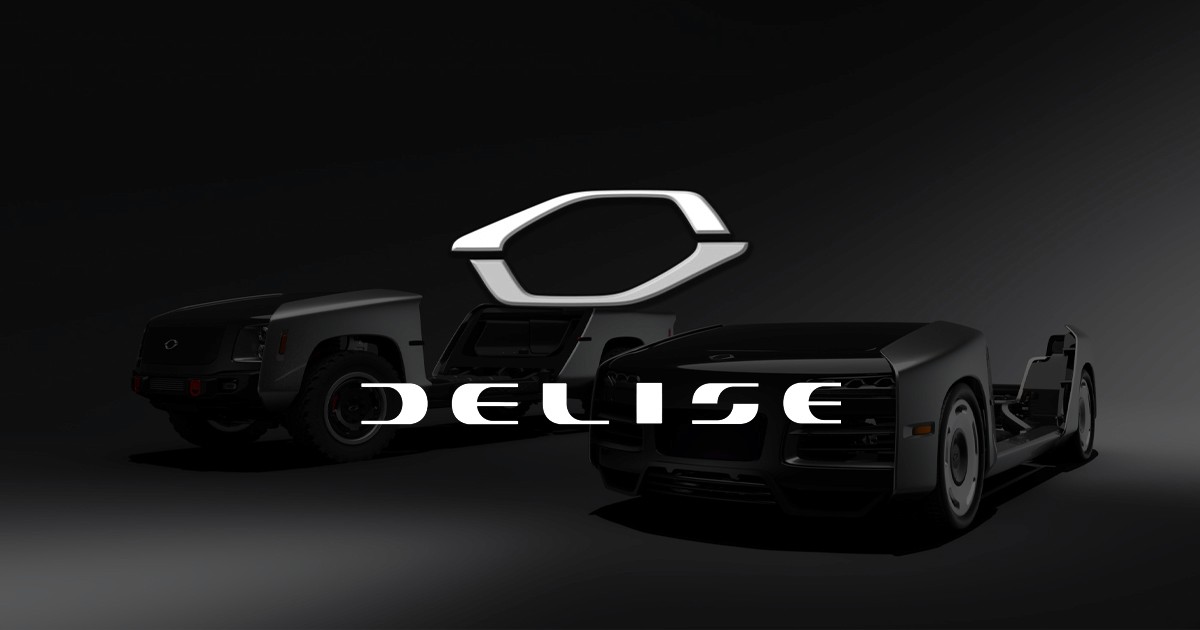
At Delise Automotive, we believe the only sustainable solution to building a better car is reimagining the entire car-building system. We call it RAD (Regenerative Adaptable Design).
The RAD system separates the vehicle architecture into two complementary, interdependent modules, the Cabin and the Deck, each of which ages and depreciates at a different rate. The Cabin is a long-term asset that consumers can customize and purchase. It seamlessly joins with one of a multi-modal array of Decks, which consumers can lease.
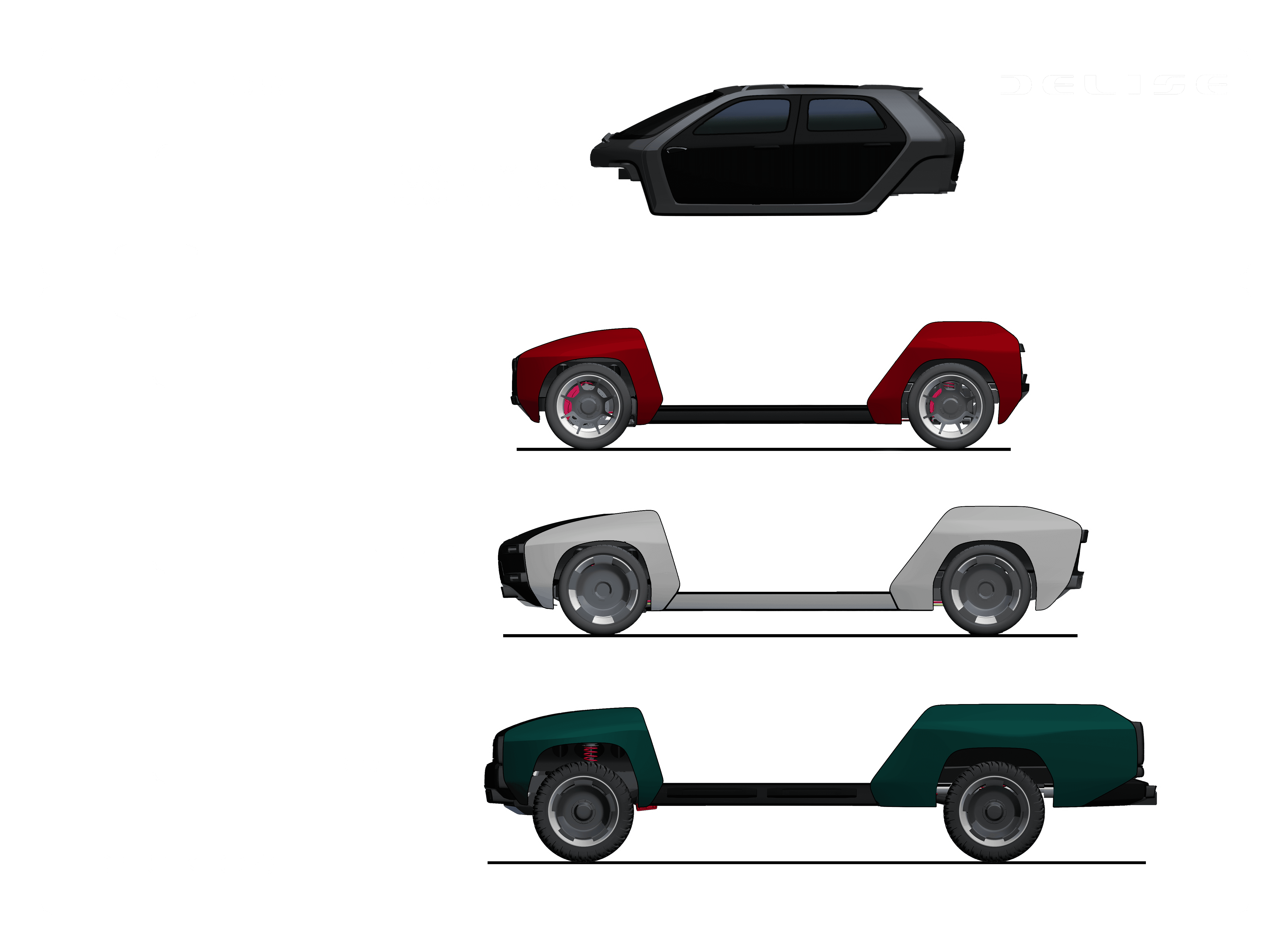
Delise Auto : Proprietary Multimodal Operating System
By designing the manufacture of cars this way, we are rethinking the car itself - not as a disposable product, but as a regenerative system. With RAD, we create the ability to “future-proof” the car, turning it into a product that gets better with age.
Manufacturers won’t need to know which propulsion technology will dominate in 2035 or which AI architecture will be standard in 2040. A RAD-built vehicle will be ready to integrate innovations as they arrive on the scene, and the lifecycle of every car produced can be extended by decades.
This is Not Hypothetical
RAD is an application of modular principles that already exist in aerospace, infrastructure, and even smartphones. The difference is that instead of designing modularity for manufacturing efficiency, we have designed it for consumer adaptability. While active plug and play modular features have been proposed in past concepts, never before has the technology been possible to this extent and with this degree of functionality.
Vehicles created by RAD thrive in the uncertainties of the future. A growing family can update the Cabin’s interior layout to accommodate more passengers. The Deck can be swapped out to accommodate a consumer’s need to move from an urban EV to a long-range hybrid. Autonomy sensors, AI interfaces, battery chemistries: All can be exchanged without discarding the Cabin.
The result is a vehicle that adapts as fast as technology and lifestyle demand, maintaining cultural relevance, technical capability, and consumer value far into the future.
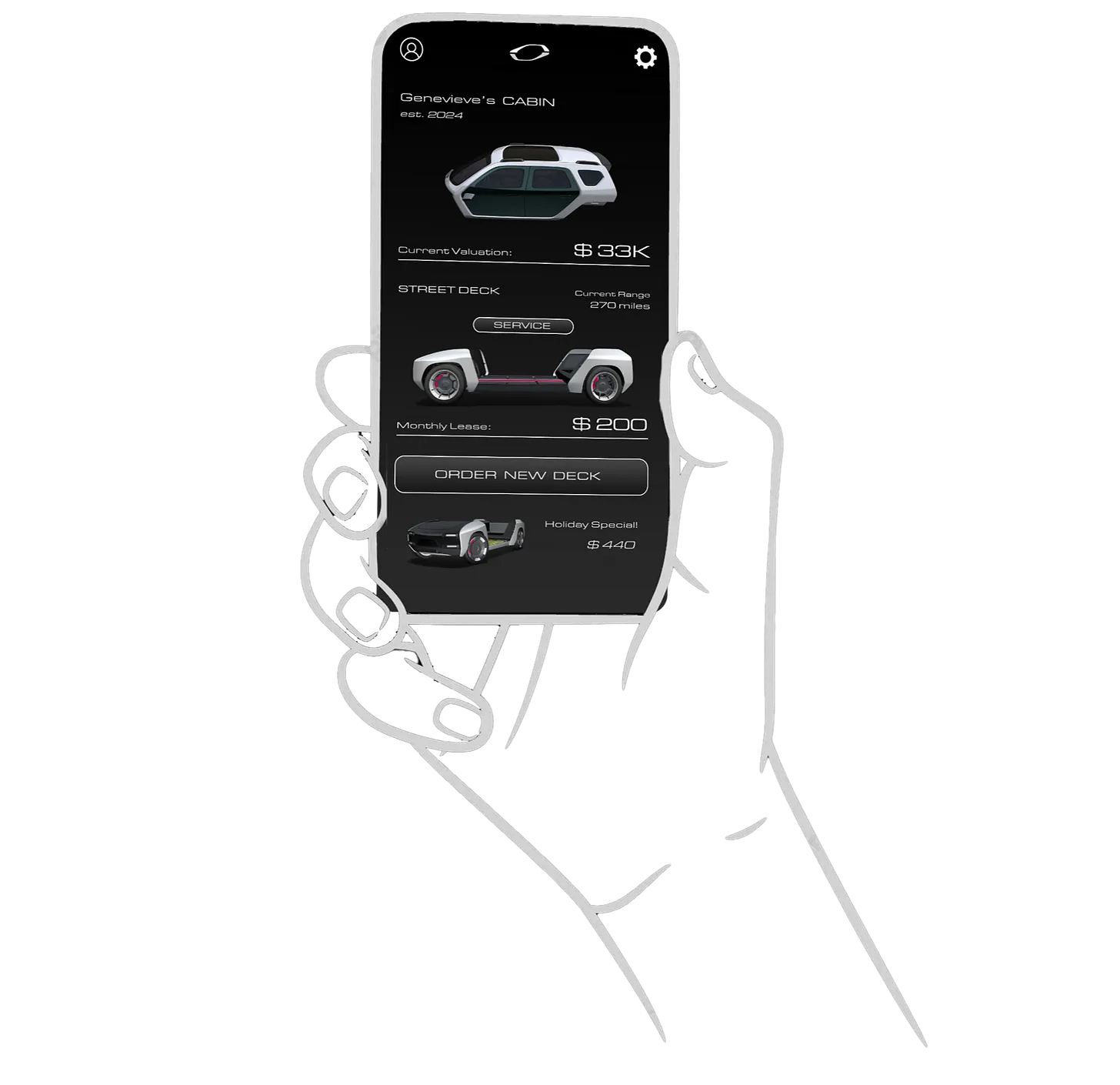
Delise Auto generational ownership UX enables up-fitting of leasable hardware while factoring and tracking residual value.
Consumers Are Ready
Cars are not laptops. They are not phones. They are more than tools. We name them. We bond with them. They carry our families and our stories. That emotional weight makes them fundamentally different from other products. Also, other than our homes, cars are our largest household expense. The cost of buying a car inhibits the impulse for quick replacement: We want our vehicles to last. This desire is supported by the fact that automakers design vehicles for a six-year shelf life, yet the average lifespan of a vehicle before consumers view it as a liability is about 11 years.
We replace our cars because they wear out, not because we don’t love them anymore, and that means consumers will embrace longevity if they are offered it. Though culture is hard-wired to entice us with the next shiny new thing, consumers are ready for a car built to maintain cultural relevance, technical capability, style, and value over decades.
The Economics of Longevity
The traditional auto industry runs on depreciation. Cars are liabilities, not assets. The faster they lose value, the faster consumers return to the lot.
Delise Automotive flips this model. The Cabin is designed to last 30+ years with minimal depreciation. The Deck and modules provide new revenue streams as consumers incrementally update and upgrade over time. Automakers and suppliers can react more quickly to shifting trends without waiting for “next gen” redesigns every five or six years.
This creates advantages for all:
Consumers enjoy vehicles that hold value and change with their needs and desires.
Manufacturers reduce development and tooling costs by reusing cores and modules.
The environment benefits from fewer discarded vehicles and lower raw material demand.
The Delise Automotive model is not about selling more cars. It’s about selling car regeneration: ever-improving products that participate in an ecosystem of updates, reuse, and reinvention.
A Cultural Shift Awaits
We can - and must - design vehicles that sip less energy, produce fewer emissions, and operate more cleanly. But efficiency alone can carry us only so far into a sustainable future. We also need to reimagine the life of a car.
A car designed to improve with age can build attachment and identity in ways no disposable product ever could. Loyalty will be built, not on a brand name, but on a specific Cabin that has evolved across the decades — carrying new decks, new technologies, new memories. That is sustainability with soul.
This is how industries survive disruption. This is how consumers gain confidence. This is how sustainability becomes an essential part of the culture.
Our Pledge for the Future
Consumers often don’t know they deserve something better until it’s offered. Our job at Delise Automotive is to offer it.
We pledge:
To treat cars as assets, not liabilities.
To design vehicles that improve with age, not decline.
To build systems that are adaptive, modular, and regenerative.
To create business models that align profitability with sustainability.
To honor the emotional bond between consumers and their vehicles by designing for longevity and relevance.
The automobile has been written off many times. We’ve heard that the “mobility movement” will replace it, that cars are relics, that shared shuttles or disposable EVs will render them obsolete.
We disagree. The mobility movement is dead. Long live the automobile.
In its next chapter, the automobile won’t just carry us. It will grow with us. It will regenerate, evolve, and endure.
This is the mission of Delise Automotive: to deliver the world’s most regenerative car system.